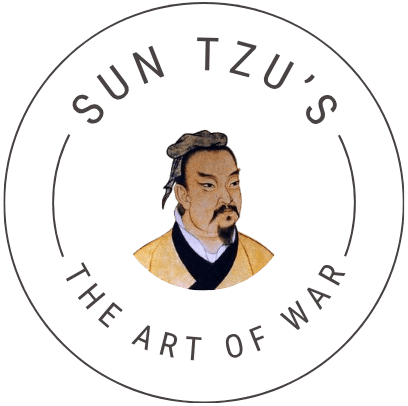
Name and period
Sun Wu, courtesy name Changqing, is traditionally placed in the Spring and Autumn period, with origins in the state of Qi and later activity in Wu. Later readers honor him as Sun Tzu — 孙子.
Sun Wu · 孙子 · The Art of War
Sun Tzu is the name English readers use for Sun Wu. The highest good in the book attributed to him is to resolve without fighting — 不战而屈人之兵. This page is a short, honest answer, not a second encyclopedia.
What can be said with care
Traditional sources place Sun Wu in the Spring and Autumn period, moving from Qi into Wu. The useful inheritance is not “how to crush someone.” It is examination before entry, completeness before breakage, and a stop when the trigger is gone.
Sun Wu, courtesy name Changqing, is traditionally placed in the Spring and Autumn period, with origins in the state of Qi and later activity in Wu. Later readers honor him as Sun Tzu — 孙子.
He is traditionally credited with The Art of War, thirteen chapters on planning, timing, terrain, intelligence, and discipline — so force is used late, if at all.
In the traditional account, Sun Wu was not only a theorist but a figure in the state of Wu, where force was expensive and information was incomplete.
Why this site reads him this way
Chapter 1 asks enter or stay out. Chapter 3 places resolving without fighting above a hundred victories. That is the frame. For how this site uses the thirteen chapters, seeAbout this reading. To do the job, start withChapter 1orChapter 3.
Sources commonly consulted include the traditional account and public biographies (Wikipedia, Britannica). We do not pretend to replace them. We answer “who” so the next click can be a judgment: stay out, or resolve without fighting.